-
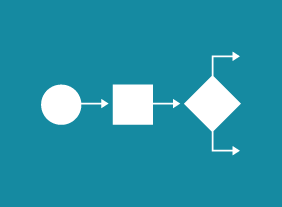
Business Process Management
$60.00To begin this course, you will learn about business process management and three related skill areas: business analysis, enterprise content management, and business process re-engineering. Then, you will work through the five stages of the business process life cycle: vision, design, modeling, execution, monitoring, and optimization. Tools such as automation, business rules, workflow engines, what-if analysis, process mining, business activity monitoring, the balanced scorecard, Lean, and Six Sigma are also covered. -
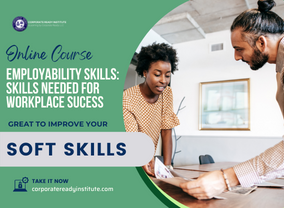
Employability Skills: Skills Needed for Workplace Success
$65.00Upon completing this course, you are going to know approaches to being an effective team member, how it feels to experience change and ways to be flexible in times of change and to approach problem-solving. You will also identify tips for giving and receiving feedback, learn ways to recognize self-confident behaviors in the workplace, and learn a three-step process to building self-confidence. -
Microsoft Word Online: Inserting Objects
$99.00In this course you will learn how to add headers and footers to a document, insert footnotes and end notes, and insert, modify, and format tables. -
Microsoft Word Online: Working with Images
$99.00In this course you will learn how to insert images, resize images, and adjust image appearance. -
Microsoft 365 Outlook Part 1: Working with Tasks and Notes
$99.00Create and manage tasks, and manage notes. -
Risk Management
$65.00In this course, you will learn about the seven Rs and four Ts that traditionally represent the key activities of risk management. This will give you a framework that you can customize for a single project, a department, or an entire company. -
Knowledge Management
$60.00In this course, you will learn what knowledge is, what knowledge management is, how tacit and explicit knowledge are different, and the business benefits that knowledge management can bring. Then, you will learn about the knowledge management mix (which includes people, technology, and process) as well as a four step process for building your knowledge management framework. You will also learn about four knowledge management models: Bukowitz and Williams KM Process Framework, Gamble and Blackwells knowledge management matrix, Bothas process model, and Nonaka and Takeuchis spiral model. Implementation aspects, such as knowledge management teams, post-mortem plans, KMBOKs, Chief Knowledge Officers, and pilot programs, are covered as well.