-
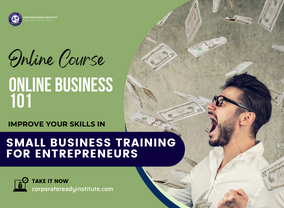
Online Business 101
$55.00This course will lead you from your idea to your online business. It will take a look at important components such as business plans and marketing while touching upon payments, online marketplaces, and much more. With those topics covered you will have the skills to become an online entrepreneur. -
Vendor Management Essentials
$75.00This course will take you through a Vendor Management process including outlining a Vendor Policy Document, developing Vendor Key Performance Indicators, assessing of potential vendor risk, describing components of a vendor contract, and monitoring the performance and relationship of vendors using questionnaires, form and auditing. -
Building Relationships for Success in Sales
$60.00This course will teach you how to leverage customer-focused selling, identify what influences relationships, expand your communication skills, manage your body language, develop a professional handshake, and grow your network. -
Microsoft OneNote Online: Getting Started
$99.00In this course you will learn how to get started with OneNote Online, set up a notebook, manage pages and sections, and print and view notebooks. -
Marketing for Small Businesses
$65.00This course will teach you how marketing is different for small businesses, the elements of a successful marketing message, what the marketing cycle looks like, how to build a marketing plan with the five Ps, how to market with social media, and how to create a marketing budget. You will also explore over 100 strategies and consider which ones are right for your small business. -
Lean Process Improvement
$60.00This course will teach you the foundations of Lean through the Toyota precepts and the five critical improvement concepts (value, waste, variation, complexity, and continuous improvement). Then, you will learn about tools to perform continuous improvement in your organization, including 5S, 5W-2H, PDSA, DMAIC, Kaizen, Genchi Genbutsu, and Lean data mapping methods. -
Risk Management
$65.00In this course, you will learn about the seven Rs and four Ts that traditionally represent the key activities of risk management. This will give you a framework that you can customize for a single project, a department, or an entire company.